Agricultural refrigeration
China's cold chain logistics market is known as the fastest growing real estate industry in China. From the perspective of cities across the country, Shanghai has formed a relatively complete cold chain logistics equipment system, but the cold chain circulation rate is particularly high. The
China's cold chain logistics market is known as the fastest growing real estate industry in China. From the perspective of cities across the country, Shanghai has formed a relatively complete cold chain logistics equipment system, but the cold chain circulation rate is particularly high. The circulation rate of live agricultural products is still not high. This phenomenon not only occurs in Shanghai, but also in large, medium and small cities. The circulation rate of fresh agricultural products is not high. The development of China's cold chain is restricted by many factors: it is related to the technical level, excellent equipment, sound management system in the industry, and whether the structure is optimized and standardized. China's agricultural and sideline products market urgently needs a third-party cold chain logistics team with well-equipped, controllable and standardized management throughout the process to drive the growth of agricultural production value and increase farmers' income. my country's current agricultural products should also turn their attention to foreign markets when meeting the needs of the domestic consumer market. Exports require not only the quantity of agricultural products but also the quality of them. China is geographically located in the southern part of the Eurasian continent, bordering the Pacific Ocean, covering five temperature zones, including cold temperate monsoon climate, mid-temperate continental climate, temperate continental climate, subtropical monsoon climate, and tropical monsoon climate, including nine major commodity grains The northeast commercial grain base is famous for its black soil, and the Sichuan commercial grain base is famous for its purple calcium soil. Including the commodity grain bases in central and southern China, China has a vast land and abundant resources, with a complete range of agricultural and sideline products and a wide variety of items. The export of China's agricultural products will drive the development of agriculture to the intensification of science and technology. Increasing farmers' income requires not only large yields but also high quality. China's cold chain logistics has an inescapable responsibility and a vital role in promoting the development of China's agricultural products. However, the current development level of China's cold chain logistics industry is uneven, and some of them consume their nutritional value in the process of circulation, losing their original economic value and function. In addition, China's medical and health care industry also needs the support of China's cold chain logistics industry. Well-equipped management standards, standardization, and controllable cold chain logistics are the backing to ensure the development of medical and health care. At present, China's cold chain logistics enterprises still have blindness and lack of waste of resources, which means that resources cannot be reasonably allocated, management is not standardized, and even the competition between costs and interests brought about by the market competition mechanism requires the need between enterprises. Work together to promote the development of China's cold chain logistics to meet the development needs of the cold chain market.
Refrigeration technology plays an extremely important role in promoting the construction of the national economy and promoting the development of science and technology. In terms of agriculture, such as fruit and vegetable production areas, storage of fruits and vegetables requires a lot of cold storage. Agricultural refrigeration is a key project supported by the government in recent years, including the cultivation of vegetables, fresh-keeping, and integrated agriculture. The future development direction will turn to high-efficiency agriculture, relying on modern mechanisms, and the benefits are far greater than the benefits of current farmland farming. higher.

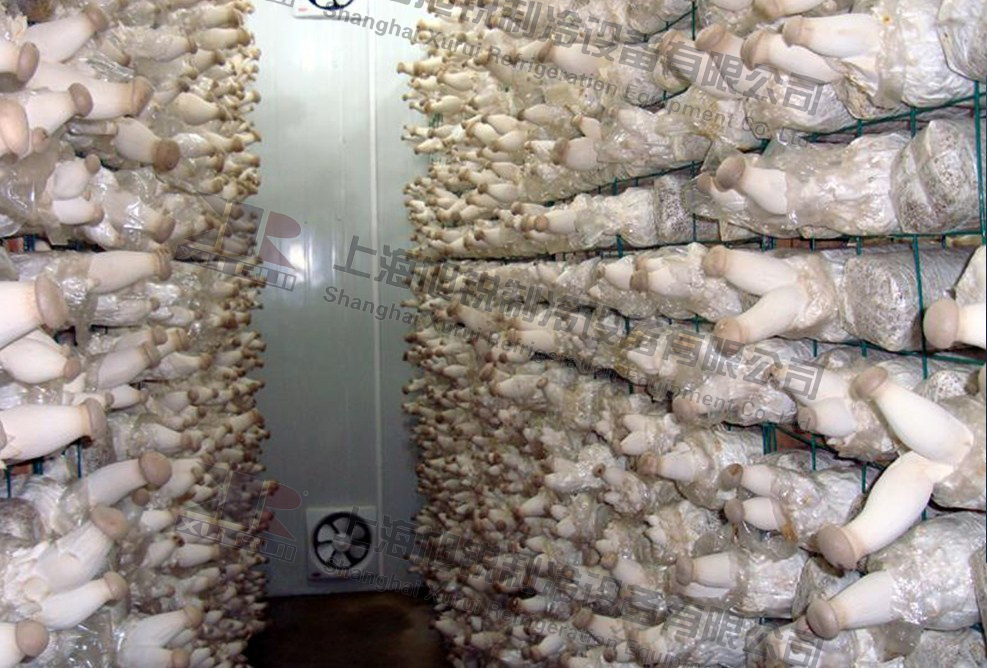
We work closely with well-known experts, scientific research institutes and professional institutions at home and abroad who have been engaged in the research and project development of edible mushroom factory production technology for a long time; The mushroom industry extends to the mainland. Our company keeps up with the pace of the market, establishes a good cooperative relationship with many leading enterprises in the industry, deeply understands the details of the factory cultivation of edible mushrooms, and absorbs and digests advanced foreign technology and design concepts. High-tech content, artificial environment complete sets of technical equipment and series products specially suitable for various process links of edible mushroom factory production, have accumulated a set of valuable experience and data. Practical process technology, professional system integration, suitable airflow control, effective energy-saving measures, and professional equipment with reliable operation have quickly achieved good economic benefits for many edible mushroom manufacturers.
Providing a complete set of solutions is the ultimate goal of Shanghai Xurui. In line with the business philosophy of "science and technology serving the society", we will wholeheartedly provide the most suitable and efficient edible fungus factory production projects of different cultivars and investment scales, newly built or renovated and expanded by virtue of the comprehensive strength of the integration of biotechnology and environmental facilities. Economical system solutions, high-quality complete sets of equipment, and a full range of services including plant planning, process design, engineering contracting, technical training, etc., enable customers to obtain satisfactory returns.
The main methods of preservation, transportation, processing and utilization of fish and aquatic products include preservation, preservation, freezing, refrigeration, canned products, salted and dried products, surimi products, fish meal, fish oil and processing of industrial supplies. Under normal circumstances, we should try our best to supply the market with fresh fish to adapt to people's consumption habits. However, in large-scale farms far from the market and inconvenient transportation, or some industrialized processing plants, in order to enrich the market supply and obtain greater profits, they compete to develop processed fish products. Therefore, the freshwater fish processing industry has become popular in recent years. On the other hand, the development of the processing industry has shown its power and role in promoting and stimulating the development of the breeding industry.
The widely used aquatic product preservation technology is basically two categories: cooling preservation and freezing preservation. Cooling and fresh-keeping has made new progress on the basis of the 1970s. The basic forms are as follows:
1. Radiation preservation: it is a preservation technology that uses gamma rays or cobalt-60 to irradiate and sterilize food.
2. Container preservation: It is mostly used for storage and transportation on board and on land. It is divided into two types: cold preservation and self-contained refrigeration packaging.
3. Gas replacement packaging and preservation: It is a technology of filling carbon dioxide or oxygen into the packaging to replace oxygen to inhibit bacterial reproduction and prevent fat oxidation.
4. Micro-freezing preservation: It is a preservation technology for fish in the temperature range of -2 to -5 °C, and the preservation period is approximately 20-27 days.
5. Ice temperature preservation: It is a technology that uses the different freezing points of various foods to preserve food in a negative temperature range below 0 °C without freezing. (0 to -1 ℃ fresh-keeping period 7-10 days).
6. Freezing and preservation: freezing fish products below -18°C, inhibiting bacterial growth and achieving longer-term preservation.
The currently applied new technologies include low temperature preservation, ultraviolet and ozone combined with cooling preservation or sterilization preservation method alone, calcium chloride brine freezing preservation applied in Japan, etc. Under normal circumstances, freezing and fresh-keeping mainly include several methods such as blowing freezing, contact freezing, spray freezing and dipping freezing. The frozen processing of freshwater fish can be produced by installing a small freezer at the place of origin, which is conducive to achieving the quality requirements of good freshness of raw materials, less pollution, easy cleaning, fast freezing and refrigeration speed, and ensuring the strict implementation of operating procedures and food hygiene laws.
The main varieties of frozen fish should be mainly in small packages, which can better meet the needs and psychology of consumers and traders. At present, the more popular varieties are frozen whole fish and processed edible parts into semi-finished products such as fish segments, fish fillets, surimi, and fish balls after the head, internal organs, fins, and scales are removed. Frozen products.
1. Frozen whole fish
(1) Technological process: raw material acceptance - cleaning (- gutting - cleaning) - loading - freezing - packaging (packing) - refrigeration
(2) Raw materials
1. Raw material requirements All kinds of freshwater aquaculture fish can be used as raw materials for frozen whole fish. Its specifications, freshness and damage requirements are as follows:
Standard for freshness of raw materials
Gills: The operculum is tightly closed, the gills are bright red, free from filth, mucus and odor
Eyes: clear proptosis, clear cornea, elastic state
Scales: Bright and lustrous color, complete scales, firm attachment, no discoloration
Abdomen: firm and elastic, with normal anus, no visceral protrusion and abdominal distention
Muscle tissue: The muscle tissue at the rib and spine is firm, elastic, and there is no separation of bone and flesh or the phenomenon of bone end piercing, and the fish body is in the state before the stiffness period.
Mechanical damage: Fish with a length of 25-30 cm is allowed to have an injury of no more than 2 cm on the head, and the spine and abdomen of small fish are absolutely not allowed to be injured
Experience shows that the best raw material for frozen fish is live fish. In order to solve the problem of the deterioration of the internal organs of the frozen whole fish and the bitter taste of the meat, it is best to use the method of removing the internal organs and washing them.
(3) Processing method
1. Raw material processing: The raw materials after acceptance should be carefully selected according to their grades and processed separately
Chilled fish processing: acceptance and grading should be rapid, and immediately washed with clean water, the water temperature should be lower than 22 ℃. Note that the washing time should not exceed 4 minutes, the fish should not be injured and descaled, and the dirt and mucus should be washed away. Processing should be carried out in the order of arrival. If it cannot be processed in time, it should be temporarily stored at 1-5°C.
Live fish treatment: In order to make the fish die quickly and quietly, and prevent the beating, gallbladder, and descaling, the electric method in the pool or the low temperature water of 1-5℃ should be used to kill the fish.
2. Plate: The processed fish raw materials should be placed in a clean fish plate, so that the belly of the fish is downward, the head is placed on the two ends of the plate, and the fins and tails should be straightened out. Second floor. The belly should be facing up when placing the second layer of fish. If possible, keep the cold chain or air conditioner to cool down.
3. Freezing and freezing: Send the packed fish trays to the quick-freezing room for quick-freezing. At this time, the room temperature can be lowered to -25 to -28 °C. When the central temperature of the frozen fish drops below -15 °C, the freezing is completed. The quick freezing time generally does not exceed 18 hours. Immediately after the quick-freezing is completed, remove the tray and pack the ice coat. The method is to turn the fish plate upside down and tap it, or soak it in water at -20°C, and be careful not to knock it hard. The water temperature of the ice coat should be below 4°C, and the time should be within 30 seconds to form the ice coat by using the low temperature of the fish. The ice coat can prevent the fish from contacting with the air, avoid dry damage and fat oxidation of fish pieces, and ensure the quality of frozen fish.
The ice-coated fish nuggets can be placed in the refrigerator room for refrigeration. The temperature of the refrigerator room is -18±1℃. The frozen fish nuggets can only be stacked on the mat not against the wall. If the refrigeration process is longer, you should pay attention to wrapping the ice coat twice a month to keep the thickness of the ice coat above 2 mm. Under normal circumstances, fish with low fat content can be stored for 8-10 months, and fish with high fat content such as bighead carp can be stored for no more than 7 months.
4. Packaging: Frozen whole fish is generally packed in large corrugated carton boxes, lined with wax paper, and packed in plastic (8805, 0.00, 0.00%) bags, each weighing 40 kg. Packaging is generally carried out before leaving the factory, and the core temperature of the frozen fish is required to be below -18°C when leaving the factory.
Second, small package of frozen products
With the improvement of people's living standards and the popularization of household refrigerators, consumers are more and more interested in frozen small packaged food. Frozen products in small packages are beautiful in appearance, clean and hygienic. They are generally semi-finished products that have undergone primary processing. They are easy to eat and reduce housework. They are a major development industry in the market economy.
(1) Frozen fish segment
2. Processing method: Wash the surface dirt of the raw fish with clean water, and remove the scales and fins. There are two ways to cut the fish body: "back cut" is the method of inserting the back of the knife from the back along the spine to cut the fish body; "abdominal cut" is the method of inserting the knife from the anus to the head. After the incision, the internal organs, blood stains, black peritoneum, and heads were removed. Cut the fish into neat pieces as required, wash and filter the water for 15 minutes, weigh (match), bag, arrange neatly, seal, put on a plate, freeze, and finally put in a box and refrigerate.
(2) Frozen fish fillets
The raw materials are fresh green, grass, silver carp, bighead carp, carp, etc. The freshness standard is the same as that of frozen whole fish. In order to ensure the quality and improve the market reputation, the freshness inspection should be carried out strictly according to the standard. Frozen fish cannot be used as raw material. The entire process must strictly abide by operating procedures and food hygiene laws. The operation site and tools should be disinfected with 0.25% bleaching powder solution.
1. Technological process: raw fish-rinsing-processing ("three removals": descaling, gutting, and head removal)-washing-slicing-peeling-fixing-rinsing-freezing-ice-coating-refrigeration- finished product
2. Processing method
1) Raw material treatment: The raw fish that have been cleaned of dirt are "three-way" on the operating table, and the small fish may not go to the head. In hot seasons, crushed ice should be added. The water in the washing tank should be running water or change the water every 20-30 minutes. The washed fish is rinsed again in clean water. It should be kept at around 15°C throughout the process. The fish should not be immersed in water for more than 3-4 minutes, and the operation process should be completed quickly, otherwise crushed ice should be added to cool down.
2) Slice setting: peeling and slicing are the key processes for product quality and yield (there are also slices with skin). Peeling is mainly done mechanically, commonly used is TM2, 38 type peeling machine. The method of slicing is performed by hand: use a knife to cut from the back of the gill cover, first cut a knife between the gills and the back, and then avoid the ribs to cut off the meat of the abdomen along with the whole piece. Cut off the other side in the same way. If manual peeling is used, the method is to put the skin side of the cut fish fillet against the operating table, with the muscles facing upward, hold the tail end with one hand and pull it back, and press the edge of the knife with the other hand to push the skin layer forward. ideal effect. The requirements for the fish fillet are that the size of the fish is neat and the knife edge is flat and clean. For the cut fish fillets, in order to prevent the influence of microorganisms and outside air, maintain the flavor, and be resistant to storage, the water-controlled fish fillets can be immersed in 10% salt water for 10-20 seconds, which is called fillet fixation. Its function is that the protein of the fresh cut surface solidifies under the action of salt to form a protective layer. It can also be rinsed with a salt additive solution to ensure quality.
3) Packaging: Packaging should be carried out under hygienic conditions. First use a transparent packaging bag, pack it into one piece according to 1000g, 500g or the proposed weight, and then put it into a wax carton according to 5 pieces. Pay attention to the inspection before packaging: the color of the fish fillets should be normal, the meat should be firm and elastic, neat and free of dirt, and the smell should be normal.
4) Freezing and freezing: Move the carton into the freezing room, quickly freeze at -25°C until the core temperature reaches -18°C, and then wrap it in ice and send it to a -18°C freezer for refrigeration.
5) Finished product inspection: The finished product is inspected regularly, requiring fresh color, normal fishy smell, no muscle separation phenomenon, firm and tight meat, clean, free of impurities and blood. The bacteria should be sampled and tested, and the indicators do not contain enteric pathogens.

 浏览器自带分享功能也很好用哦~